
Veneers in Bayan Lepas, Penang, designed for your smile
Dr Vanessa Goh looks after your veneers at YA Dental Clinic, Sungai Ara, Bayan Lepas. A veneer is a thin covering on the front of a tooth. We design yours to look natural on you.

Dr Vanessa Goh
Your dentist for veneers
Aesthetic dentistry is one of Dr Vanessa’s interests, veneers in particular. She has a keen appreciation for the balance between detail, function and aesthetics. With veneers, that means teeth that look natural and work well when you bite.
Dr Vanessa takes the time to listen and understand what you hope to achieve. Your veneers start from that conversation.
She also looks beyond your front teeth, to your overall oral health and long-term goals. That is why we check your gums and bite before anything is planned.
She wants you to feel comfortable, confident and well looked after, from the first chat to your check-ups.
DDS, Universiti Kebangsaan Malaysia · Interests: aesthetic dentistry, veneers, orthodontic treatment and preventive care · MDC registration: 14514
How a veneer fits
A veneer is a thin covering fixed to the front of a tooth. It fits much like a false nail over a natural nail. Veneers are made from porcelain, or from tooth-coloured composite, the material used for white fillings. They can change the colour, shape and overall look of a tooth.
Porcelain or composite veneers
| What to compare | Porcelain veneers | Composite veneers |
|---|---|---|
| How it is made | Made to fit your tooth in a dental laboratory | Built up on your tooth in layers, then shaped and polished |
| Visits | Usually two, a few weeks apart | Usually one |
| Enamel removed | A small amount from the front and sides | Often less |
| Staining | Resists stains well | Stains and wears more easily |
| If it chips | Small chips may be repaired, or a new veneer made | Easier to repair |
| How long it lasts | Usually longer than composite | Usually needs repair or replacing sooner |
| Fee | Usually higher | Usually lower |
We provide both porcelain and composite veneers. At your check-up, we explain which suits your teeth, and why.
When veneers suit you
| If you have | What we plan |
|---|---|
| Stains that whitening leaves behind | Veneers can cover them. We may try whitening first, if it suits you. |
| Chipped or worn front teeth | Veneers can restore their shape |
| Small gaps between front teeth | Veneers can mask small gaps |
| Teeth uneven in shape or size | Veneers can even out how they look |
| Slightly crooked-looking teeth | Veneers change how they look. Braces move the teeth themselves. |
| Decay or gum disease | We treat these first, then plan your veneers |
| Grinding, clenching or a deep overbite | We check your bite first, and talk you through what suits it |
We take a conservative approach. Your teeth and gums come first, then your veneers.
Veneers, crowns, whitening or braces?
| Treatment | How it works | Often chosen for |
|---|---|---|
| Veneers | A thin covering bonded to the front of the tooth | Stains, chips, small gaps and uneven shapes |
| Crowns | A cap that covers the whole tooth, to strengthen and protect it | A tooth badly damaged by decay or injury |
| Whitening | A gel that lightens the shade of your own teeth | Teeth yellowed by tea, coffee, smoking or age |
| Braces | Braces or aligners that move teeth into place over time | Crooked teeth, or a bite that needs correcting |
Sometimes your plan joins two of these, such as whitening before veneers. We explain each option plainly, then you decide.
Your veneers, step by step
We explain every step plainly, before it happens.
Listen and check
Tell us what you hope to change. We check your teeth, gums and bite, and treat any decay first.
Plan and shade
We choose porcelain or composite with you, and match the shade to your teeth. We confirm the fee first.
Prepare
A thin layer of enamel is removed from the front. Your dentist may use a local anaesthetic. We take a mould or scan.
While you wait
A dental laboratory makes porcelain veneers, which can take a few weeks. Temporary veneers may cover your teeth meanwhile.
Fit
We check the fit, shape and colour with you. Then we bond your veneers on and check your bite.
Check-ups
We may see you after a couple of weeks to check your veneers. Regular check-ups help them last.
With composite veneers, steps 3 to 5 usually happen in one visit.
How it feels
You can eat and drink as usual once any anaesthetic wears off. You can go back to your usual day straight after.
Your teeth may feel different at first. It can take a few days to get used to your veneers. If your bite feels off, tell us and we will adjust it.
Your teeth may also feel more sensitive to hot and cold, as some enamel is removed. Tell us how they feel at your check-up.
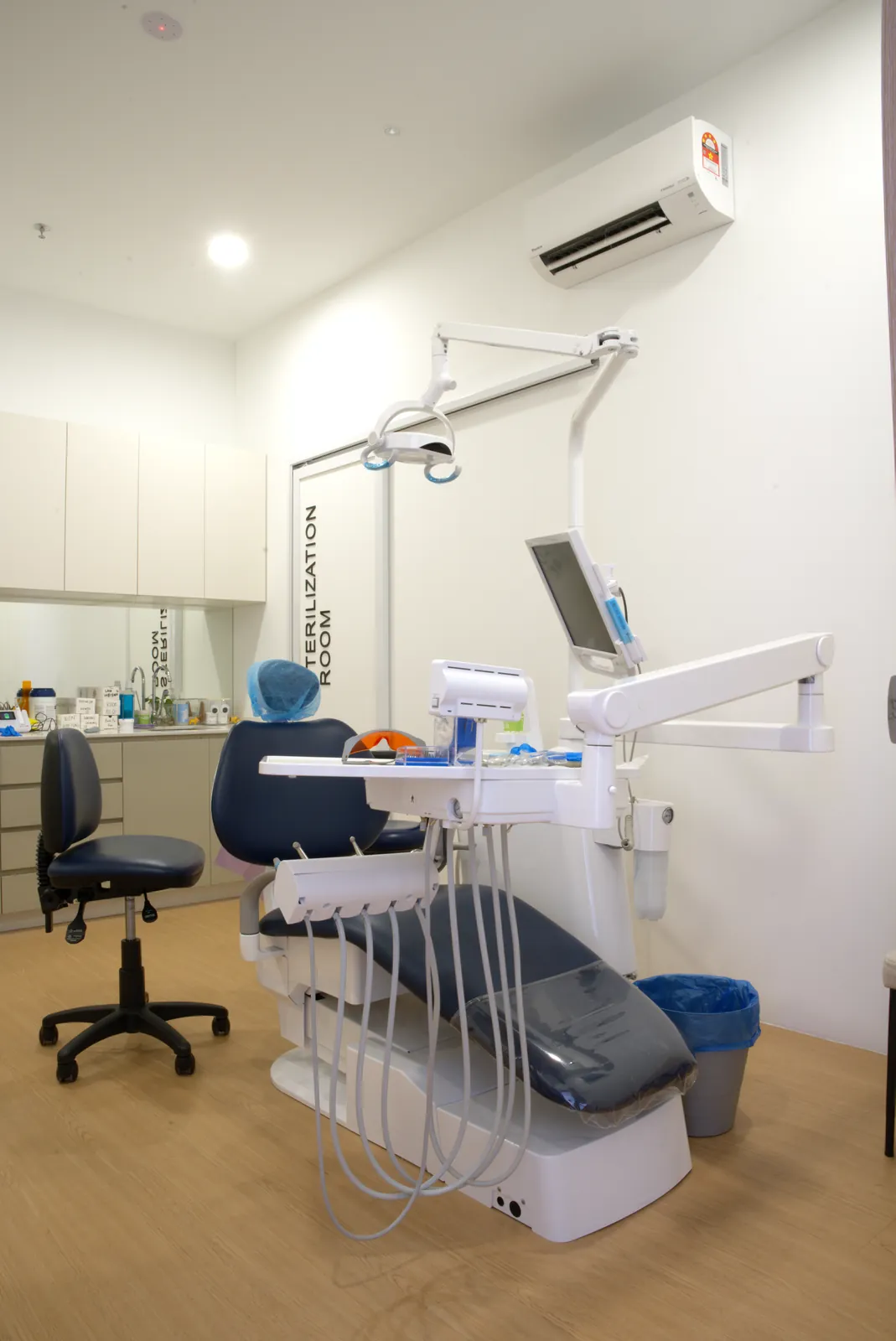
We keep our clinic cosy and relaxed, so you can feel at ease through every visit.
How many visits, and how long veneers last
On average, veneers last 10 to 15 years with proper care. Porcelain usually lasts longer than composite. A veneer can still chip, crack or come loose over time. Small chips may be repaired, and sometimes a new veneer is needed.
Looking after your veneers
| Do | Go easy on |
|---|---|
| Brush twice a day with a soft brush and fluoride toothpaste | Biting hard food, like apples or carrots, with your front teeth |
| Clean between your teeth once a day | Biting your nails or chewing hard objects |
| Cut hard food small and chew with your back teeth | Opening packets with your teeth |
| Wear a mouthguard for contact sports | Kopi, teh tarik and other dark drinks, which can stain over time |
| Keep up your check-ups and scaling and polishing | Whitening products, which can scratch veneers |
Teeth can still decay under or around a veneer. Daily cleaning keeps the tooth underneath healthy.
Fees
| Treatment | Fee |
|---|---|
| Porcelain veneer, per tooth | RM 1,800 |
| Composite veneer, per tooth | RM 400 to RM 450 |
The fee depends on the type of veneer and how many teeth you would like covered. We confirm it with you before treatment starts.
Common questions
Ask us anything else at your check-up. We are happy to explain.
Where can I get veneers in Penang?
We place veneers at YA Dental Clinic in Sungai Ara, Bayan Lepas, with Dr Vanessa Goh. We start by listening to what you hope to change. Then we check your teeth, gums and bite. Any decay or gum problem is treated first.
Porcelain veneers vs composite veneers: which suits me?
Porcelain veneers are made in a dental laboratory and usually take two visits. They resist stains well and usually last longer. Composite veneers are built on your tooth in one visit, and are easier to repair. Your dentist explains which suits your teeth.
How long do veneers last?
On average, veneers last 10 to 15 years with proper care. Porcelain usually lasts longer than composite. Brushing, cleaning between your teeth and regular check-ups all help them last.
Do veneers hurt?
Your dentist may use a local anaesthetic while a thin layer of enamel is removed. Afterwards, your teeth may feel different for a few days. Some people find them more sensitive to hot and cold. Tell us how they feel, and we will help.
Are veneers permanent?
In most cases, yes. A thin layer of enamel is removed to fit them, and that step is permanent. Veneers can also need repair or replacing over the years. We talk this through with you before you decide.
Do veneers damage your teeth?
Veneers themselves do not damage the tooth beneath. The tooth can still decay under or around a veneer, so daily cleaning matters. That is also why we check your teeth and gums before planning veneers.
Veneers vs crowns: what is the difference?
A veneer covers only the front of a tooth. A crown covers the whole tooth, to strengthen and protect it. Crowns are often used for teeth badly damaged by decay or injury.
Can veneers fix gaps or crooked teeth?
Veneers can mask small gaps between front teeth. They can also make slightly crooked teeth look straighter. To move teeth or correct a bite, braces may suit you better. Dr Vanessa can talk you through both.
Do veneers stain, and can they be whitened?
Porcelain resists stains well, and composite stains more easily. A veneer keeps the colour it is made in. So if you would like whiter teeth, we plan whitening before your veneers are made. Then we match your veneers to your new shade.
Can I get a veneer on just one tooth?
Yes. A veneer can go on one tooth, or on a few. We match its shade and shape to the teeth beside it.
Can veneers fall off?
A veneer can come loose, chip or crack over time. If one feels loose, call us and we will check it. We can re-bond, repair or replace it, depending on what we find.
How much do veneers cost at YA?
From RM 400 per tooth for composite veneers, and RM 1,800 per tooth for porcelain. The fee depends on the type of veneer and how many teeth you would like covered. We confirm it with you before any treatment starts.
Address
35-03-11, Commercial Square, Golden Triangle 2, Jalan Dato Ismail Hashim, Sungai Ara, 11900 Bayan Lepas, Pulau Pinang
Phone
Hours
Daily, 10am to 7pm
Clinic registration
230705-04197-12
Whether this treatment suits you depends on an assessment by our dentist, as it may not suit every patient.
Last updated: 8 October 2026